Home » vegetarian

Turmeric

22 July 2007 1,042 views 26 Comments

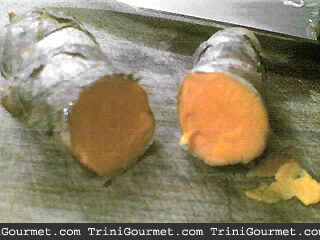
TurmericSeveral months ago my mother came home with these things that looked like ginger roots, but smaller and thinner. I asked what they were and she said ‘turmeric’. She had bought them for medicinal reasons (we use a lot of herbal and aromatherapy concoctions in my household) but I also knew it had culinary value as well. Curious, I tried using it in a recipe or two but found it more hassle than it was worth. It’s very sticky and makes a huge mess, the color gets on EVERYTHING! So I have returned to turmeric in the powdered form. The rest of the batch have been planted and are sprouting quite nicely in our garden where they should provide medicinal relief for many months to come :)

Turmeric

From WHFoods:

Turmeric has a peppery, warm and bitter flavor and a mild fragrance slightly reminiscent of orange and ginger, and while it is best known as one of the ingredients used to make curry, it also gives ballpark mustard its bright yellow color.

Turmeric comes from the root of the Curcuma longa plant and has a tough brown skin and a deep orange flesh. Turmeric has long been used as a powerful anti-inflammatory in both the Chinese and Indian systems of medicine. Turmeric was traditionally called “Indian saffron” because of its deep yellow-orange color and has been used throughout history as a condiment, healing remedy and textile dye.

History

Turmeric is native to Indonesia and southern India, where it has been harvested for more than 5000 years. It has served an important role in many traditional cultures throughout the East, including being a revered member of the Ayurvedic pharmacopeia. While Arab traders introduced it into Europe in the 13th century, it has only recently become popular in Western cultures. Much of its recent popularity is owed to the recent research that has highlighted its therapeutic properties. The leading commercial producers of turmeric include India, Indonesia, China, the Philippines, Taiwan, Haiti and Jamaica.

How to Select and Store

Even through dried herbs and spices are widely available in supermarkets, explore the local spice stores or ethnic markets in your area. Oftentimes, these stores feature an expansive selection of dried herbs and spices that are of superior quality and freshness than those offered in regular markets. Just like with other dried spices, try to select organically grown turmeric since this will give you more assurance that the herb has not been irradiated.

Turmeric powder should kept in a tightly sealed container in a cool, dark and dry place. Fresh turmeric rhizome should be kept in the refrigerator.

Turmeric

This post has been submitted to Weekend Herb Blogging, hosted this week by In Mol Araan

This website uses IntenseDebate comments, but they are not currently loaded because either your browser doesn't support JavaScript, or they didn't load fast enough.

26 Comments »

  • Trig said:

    Wow, I think I can safely say I’ve never seen an actual turmeric rhizome before.

  • Sarina (author) said:

    Trig – Glad I shared then! :) it’s easy to mistake for ginger, but practically NEON inside lol :)

  • Nicole said:

    You know how long I trying to get some roots so I can grow a plant? Where did your mom get them? My mother use to grow them, also,intrinidad.
    To reduce the mess,just grate a root with skin on till you get a teaspoon or whatever and add to the food eg dal.Its a better flavour than the dried, powdered stuff.

  • Sarina (author) said:

    Nicole – hehe, she picked them up in the POS market, but I’ll ask her to make sure I’m not passing on misinfo :) I’ll give your suggestion (grating with the skin on) the next time I have a recipe that calls for tumeric, i hope it works. That stuff got on EVERYTHING! :lol:

  • Nicole said:

    You know in Asia I had a herbal body scrub at the spa, and turmeric was one of the main ingredients. if you into the seasalt scrub thing you can try it.

  • Nicole said:

    And also that the leaves are used to wrap and cook fish, in curries etc. At least that wont create a mess!

  • Sarina (author) said:

    Nicole – actually i/we make a lot of our own bath products and I do make sea salt scrubs… never thought that tumeric could be added there… thanks for the tip! The leaves are so large and beautiful I’m glad to know that they can be put to practical use as well :) You’re a wealth of information! :D

  • the chocolate lady said:

    wow, thanks for this!

  • Kalyn said:

    Very interesting. I had seen a picture of it somewhere, but not the inside. It does look like it would really stain. Even the powder can stain some things if you’re not careful. Love the idea of planting it!

  • Sarina (author) said:

    Kalyn – it was like neon contact cement hehehe got on everything, my hands, the counters..the food processor, and it took bleach, scrubbing powder and brillo pads to get it out. ack! lolz :)

  • Anna said:

    This is really interesting. Thanks for all the detail. I think I will also be content with powdered turmeric

  • Ari (Baking and Books) said:

    Very cool, I’ve never cooked with “real” turmeric before, only the powdered stuff!

  • Chennette said:

    Mom grows this. It’s great in curries and especially in some of those malaysian curries. We also grate ginger with the skin on, makes things easy to handle.

  • Sarina (author) said:

    Ari – I’m gonna give it another try using the suggestions above :)

    Chennette – i scared of ginger skin :D dunno why, one of those silly things :) but i think i’ll try the tumeric with the skin on :)

  • mom said:

    Hi Sarina

    Now is the time to harvest the large tumeric leaves. By mid September they would dry out and would be time for reaping the tumeric roots. Scrub and wash well and store in freezer and when ready to use just take a piece out and grate . This way it is so easy, do the same for the ginger and then you do not have to be scared of it
    Take care

  • Sarina (author) said:

    Hi MomS!! :D I been thinking about you today! Hope you are well :) Told mom what you wrote, she wanted to know what size pot it needs, and if it needs more sun? :) )) Take care!!

  • mom said:

    I plant it in the ground in my seasoning patch, shadowbeni and thyme etc and it gets good sunlight. Every year the number of plants gets bigger and bigger, even though I share plants.
    Did you get the recipe from Chennette for fried aloo(potatoes).
    My regards to your Mom
    Bye and take care.

  • Sarina (author) said:

    MomS – My mom says hi :D She’ll follow your advice, thanks so much! :) I have not gotten the fry aloo recipe yet, maybe she hasn’t had time to type it up/pass it on yet? :)

  • Chennette said:

    oops…I did get it and passed it on but forgot to COPY you…will do, but you know I blogging it today self :-D without picture, but that will come. Don’t think my hosts will want to come back home to a smoke alarm if i try to make it here by myself for a picture…

  • titilayo said:

    My auntie puts turmeric (preferably fresh, but she’ll used powdered if she can’t get fresh) in just about everything she cooks. Any meal she makes, there’s bound to be some component of it that is tinted bright yellow. I’ve never really noticed its flavour though, but perhaps I’ve grown immune by now.

  • Sarina (author) said:

    Titilayo – I am gonna have to do taste tests to figure out what the taste is myself lol :D But that’s so funny that she puts it in everything!!! She sounds colourful :D

  • Chataigne said:

    You can also grate it and make a pickle with it like kuchela (except you don’t dry it out). Good for diabetics, people wanting to lose weight, and clean out the blood.

  • Sarina (author) said:

    Chataigne – thanks for that, i hadn’t heard of that one before! Will give it a try :)

  • Chataigne said:

    Sarina,

    Here are two links on how to prepare haldi achar. Anyone familiar with how to make kuchela can add dey own flava to the melee:

    http://kamalkitchen.blogspot.com/2008/10/turmeric-pickle.html

    http://www.indiaparenting.com/cookingclub/mainrecipe.cgi?recipe_id=1053&cuisine_id=12

  • Sarina (author) said:

    Chataigne – Thanks! I really appreciate the links, have bookmarked them to try in the future :) Best Wishes!

  • bodydetoxification said:

    i read on the internet that Turmeric (Curcumin) has a natural anti-inflammatory properties and it also enhances wound healing. i sprinkle a bit of turmeric powder on my food.

Leave your response!

Thank you for taking the time to leave a comment on TriniGourmet. Even though I can't always respond to every comment, I greatly value your feedback, your support and even respectful debate. Comments that are merely thinly veiled self-promotional tools however, as well as inflammatory or mean-spirited attacks on myself, my work, or that of other users, will not be tolerated or published.

Add your comment below, or trackback from your own site. You can also subscribe to these comments via RSS.

Be nice. Keep it clean. Stay on topic. No spam.

You can use these tags:
<a href="" title=""> <abbr title=""> <acronym title=""> <b> <blockquote cite=""> <cite> <code> <del datetime=""> <em> <i> <q cite=""> <strike> <strong>

This is a Gravatar-enabled weblog. To get your own globally-recognized-avatar, please register at Gravatar.

CommentLuv Enabled