In North America and the English-speaking Caribbean (of which Trinidad and Tobago is part) entrée is used as a synonym for the main course.
In its use outside of North America, an entrée is more substantial than hors d’?oeuvres and better thought of as a half-sized version of a main course, and restaurant menus will sometimes offer the same dish in different-sized servings as both entrée and main course.
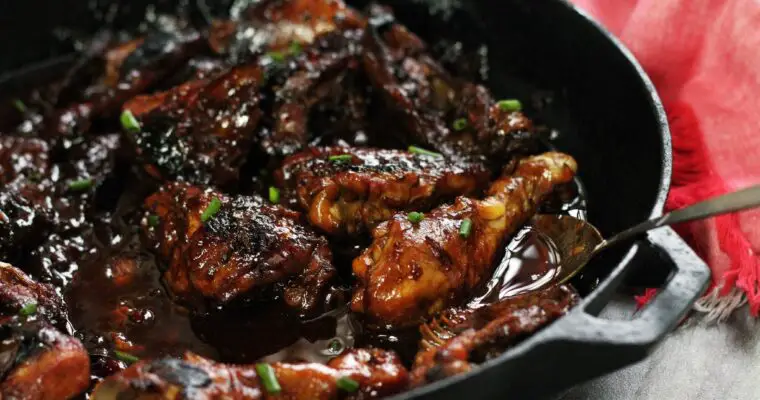
*cues* “So long I ent see yuh!” Walk into the room with this chicken and all will quickly be forgiven! ???I made this delectable Guava-Glazed Chicken, with fresh Rosemary from my garden, back in April on my Twitch stream!
A twist on a recipe that I saw in 50 Shades of Chicken (an awesome and hilarious Secret Santa gift that I received from another streamer last year), I hope you will find the outcome as enjoyable as I did!
Guava-Glazed Chicken with Fresh Rosemary [RECIPE]
Author: Sarina
(adapted from Baked Chicken with Apricot Jam, Sage and Lemon Zest in 50 Shades of Chicken)
Ingredients
1 (31/2-4lb chicken, cut into 8 pieces, patted dry)
1 1/4 tsp coarse sea salt
3/4 tsp freshly ground black pepper
16 sprigs fresh rosemary (you can chop 8 sprigs into 2 halves)
3 tbs extra-virgin olive oil
1 lime
1/3 cup guava jam
1 tsp soy sauce
1 tsp – 1 tbs pepper sauce (optional)
3 garlic cloves, minced
Instructions
Season the chicken pieces with salt and pepper. (If you want you can also marinate the chicken overnight in Trinidad green seasoning)
Preheat the oven to 400F.
Grate the zest from the lime and squeeze the juice.
Add the zest and juice to a small bowl and mix in the jam, soy sauce and minced garlic (and pepper sauce if using).
Lay 8 sprigs of rosemary evenly onto a greased 9×13 baking dish
Throughly glaze each chicken piece and place one piece on top of each rosemary sprig.
Reglaze the top of the chicken pieces and place a rosemary sprig on top as well
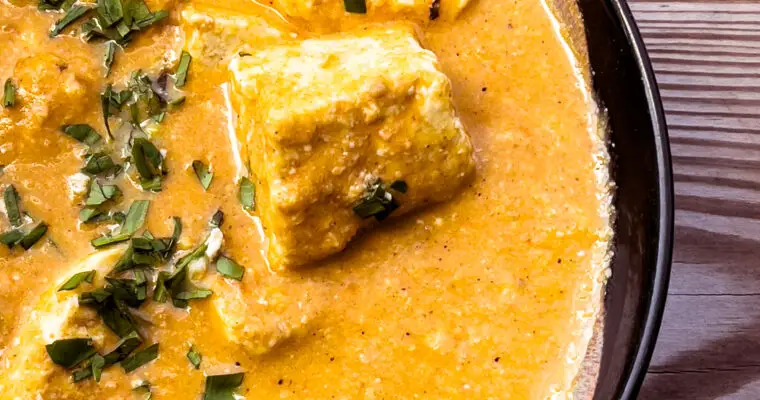
First of all, before I get to this recipe for Paneer Butter Masala, can I just say how good it is to be back! In May my laptop crashed and required extensive repairs. While waiting for that to happen, I lost TriniGourmet in a server issue (that I still don’t fully understand). It took a while but we’re now on a new faster system, and hopefully -this time- the backup service will actually be functional! I lost my most recent posts but am still exploring ways to get them restored. Fingers crossed! Did I mention that during all of this my apartment was also almost completely flooded? Papayo!
Last week I returned to streaming on the Twitch platform, and the first dish I prepared was this Paneer Butter Masala, (I also made Bhaji Rice and a Quick and Easy Instant Pot Flan -recipes forthcoming) with homemade paneer! If you’ve never made paneer from scratch I highly suggest that you give it a try! I fell in love with the dish Saag Paneer in my college days and missed it greatly upon returning home to Trinidad. How wonderful it is that so many continental Indian restaurants exist here now that offer this dish, and many others, featuring this mild creamy cheese. Still, they aren’t the cheapest to purchase and once you try making it yourself you may find that the extra effort is worth the outcome! The recipe/method that I return to time and time again for homemade paneer is this one. And, for the Paneer Butter Masala I used this recipe. I made the Instant Pot version, but the recipe comes with stovetop methods as well!
Wow! I never expected to be gone from this site for so long! It shows you how fragile and uncertain life really is. Shortly after my last post in late December, my mother and I “suddenly” sold the home we’d lived in for most of my life and started a new chapter in our lives. It wasn’t easy as everything fell on me re: the logistics of the move. On top of that we fell into some personally trying situations that saw us homeless, for an albeit brief time, and then being pulled into an ongoing legal battle. To say it’s been traumatic would be a grave understatement. A lot is still in limbo, but we are getting by.
All the while I’ve been trying to keep my head above water and to find some kind of purpose and positivity in the struggle. Over the last month and a half, as things finally settled into some semblance of a routine, I thought deeply about the future of my creative career, including this site. What I really needed. Who I really am.
After more than 10 years on the local food blogging scene (yeah I’m one of the OG’s! ????) I’ve seen the scene change immensely and become increasingly saturated. All in all I think this has been a great thing for the populace, establishments and the representation and expression of local culinary talent and traditions.
I also feel that it has relieved the pressure some of us creatives can sometimes experience to be all things to everyone, especially when trying to establish/secure a voice in a still emerging (at least locally) field.
Not to talk about monetization!
It’s been very easy, especially after my father’s death, and the spiral of events that triggered, to feel as though it was simple and natural for me to turn in the towel. It’s no longer enough to be anonymous with a point and shoot and a ‘blog roll’ (remember those?). Now you basically need an in-house film crew, PR team and octopus arms to manage multiple social media platforms while providing regular content simultaneously, and for free (to the end user). I watched sites I loved like Design*Sponge make the decision to close their virtual doors due to the economics of the changing online environment. On several occasions it felt like the mature and sensible thing to just not renew the server and/or domain (and the many charges that come with managing/securing it). There were so many voices on the scene, more consistent in posting with teams, budgets etc. that I felt that my bowing out would be no big loss to the larger conversation. Still, something very still and quiet deep within told me to just hang on. That I did have a unique voice and point-of-view that was valuable, no matter the audience size.
I’m glad I listened.
I am currently (finally!) in a place where I feel both I and the landscape are in a good enough place for me to double down on the original reasons behind why I started TriniGourmet and leave the rest to others to pick up and run with. You may have already noticed a pivot happening on my Instagram and if not you soon will!
While some of you may be happy about the changes that are coming I also accept that others may be left perplexed and/or disappointed. That’s ok. As the sole content creator hereI’ve realized (at times painfully) that taking on every piece ofcriticism and feedback only leads me into areas that don’t inspire or interest me.
That my friends is a surefire recipe for burnout and depression! Nobody wants that!
MOVING AHEAD
In the weeks and months ahead I’ll be focusing on building a supportive food community that shares a joy and passion for Caribbean cuisine (both it’s past and its future), while also continuing to explore what the wider world has to offer. I’ve always embraced gluten-free and vegan/vegetarian recipes and takes on local favesand will also continue to do so. I’ll be restoring years of previously hacked content, bringing you more behind-the-scenes access/coverage and also sharing a ton of the dishes I’ve been whipping up lately!
If you’re still reading at this point, do know that I enjoy and appreciate every one of you!
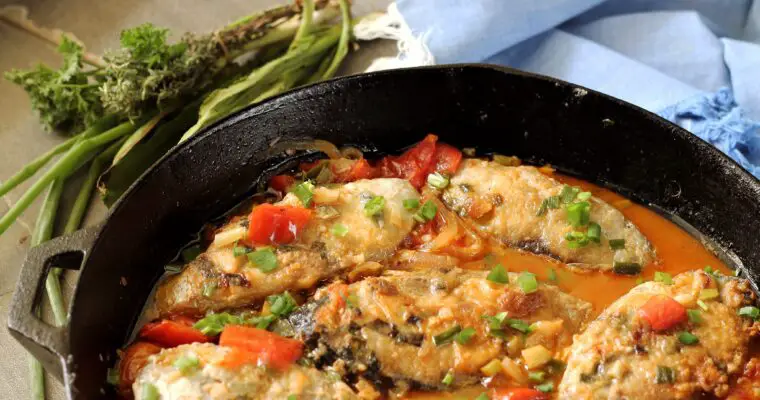
As a massive thank you for sticking around here’s a recipe for Trinidad Stewed Fish from my ebook “Glam By Request: 30+ Easy Caribbean Recipes”.
I’m also happy to let you know that I am in the process of updating both of my ebooks (Glam by Request & Holiday Glam) and putting them back on sale! When that happens they will sell at their regular price of $6.95 USD, however!
Can’t afford $5 USD? Even $1USD a month will go a long way toward defraying the costs of site maintenance and recipe development. It will also allow me to keep my editorial independence and integrity. Something I have fiercely guarded and which at times I have felt has gone against my better economic interests. Ack!
Also in the works are more opportunities for your ideas and interests to help shape future content through intimate focus groups and other soon to be announced initiatives. Some of these options may be at different price points and *totally* optional. The bulk of my content, as well as TriniGourmet itself, will however continue to remain free. It is my hope though that if you have enjoyed and received value from my 13+ years of work and content that you will choose to support it’s continuation on an on-going basisor at occasional one-off points.
Anyway, that’s just a little bit about what’s been going on behind the scenes and what is in the works. I enjoy transparency so do know more updates will be coming. Again, I enjoy and appreciate every one of you!
Now on to the recipe for Trinidad Stewed Fish!
Trinidad Stewed Fish with Gluten-Free Option (recipe)
Excerpt (Glam By Request.com):
Fiery red and garlicky in taste, Trinidad ‘Stew Fish’ is a simple dish to master as the ingredients are few. Be sure to have your fish steaks completely at room temperature as the high heat needed to brown the meat can cause the fats to ooze. If this does happen simply scrape them away and discard before proceeding. My adaptation of my father’s Stewed Fish recipe lessens the traditional assertiveness of the garlic in preference for a milder, luxurious tomato-butter sauce that is more suited for entertaining.
Trinidad Stewed Fish w/ Gluten-Free Option (Recipe)
Recipe Type: main
Cuisine: Caribbean
Author: Sarina
Prep time:
Cook time:
Total time:
Serves: 6
Fiery red and garlicky in taste, Trinidad ‘Stew Fish’ is a simple dish to master as the ingredients are few.
Ingredients
1 lb. fish steaks, room temperature
2 tbsp flour (use rice flour for gluten-free)
1 large onion, cut into half moons
3-4 chive stalks
4 tomatoes, sliced into rings
1 tsp salt
3 tbsp oil
1 cup water
lime juice
3 garlic cloves, minced
1 tbsp butter or margarine
1 tbsp tomato paste
1 tsp brown sugar
chadon beni
1 scotch bonnet pepper
Instructions
Sprinkle fish steaks (both sides) with lime juice
Season with salt, chadon beni, 1 clove garlic (minced), 2 tbsp water, 1 chive stalk (minced)
Marinate 15 minutes
Remove fish from marinade and coat on both sides with flour
Heat oil over medium heat
Add fish steaks and brown on both sides, remove and set aside
Some dishes don’t just feed you. They locate you. They pull you back to a specific kitchen, a specific afternoon, a specific smell that you couldn’t name as a child but would recognise anywhere as an adult. For me, and for so many Trinidadians, that dish is stew chicken. Not “braised chicken.” Not “chicken casserole.” Stew chicken. The Sunday kind. The kind that fills the whole house before it ever reaches the table.
As my friends in the northern climates start to hunker down for the winter, and temperatures start to cool here as well (albeit only at night), I thought it would be good to share some local-styled “stew dishes”. Hearty and warm, they’re sure to keep you full and satisfied! First up, Trinidad Stewed Chicken or “Stew Chicken” as we say in the local parlance. Can you believe this site is now over 10 years old? Talk about being one of the original local OGs! In all that time I can’t believe that I hadn’t gotten around to posting a recipe for Trinidad Stewed Chicken! A staple of many Sunday lunches, as well as dinners and gatherings, everyone puts their own spin on it, however certain components such as the long marinade time in “green seasoning” and “browning” in sugar are non-negotiable!
Having a Jamaican mother, I grew up eating its closest cousin, Chicken Fricassee, regularly. The two dishes look alike on the plate, but taste-wise, they’re entirely different animals. That difference comes down to two things that are completely non-negotiable in any authentic Trinidad stewed chicken recipe: the green seasoning marinade, built on the unmistakable flavour of culantro (chadon beni), and the browning, where brown sugar is taken to a deep, rich mahogany before a single piece of chicken ever touches the pot.
These aren’t optional flourishes. They’re the whole point. Master these two elements, and you won’t just make a good stew chicken. You’ll make one that someone could close their eyes and place. One that tastes like it belongs somewhere specific, because it does.
That’s what I’m here to help you do today.
Browning is a non-optional step if you’re really interested in getting that authentic Trini flavor in your dish. You want the sugar to reach a rich mahogany shade. Upon which you will immediately add the chicken pieces and turn them to coat thoroughly. You have to be careful to keep your eye on the pan as the sugar melts. When the outer ring turns the desired shade (as shown above) you have about 30 seconds to add your meat before the sugar will start to burn. We don’t want that!
Be sure to turn the pieces at 2-3 minute intervals so that they are evenly coated and the browning caramelizes to the skin.
How gorgeous does that look? Most recipes will have you continuing to cook the chicken on the stovetop, however taking a leaf from Trinidad’s culinary grand dame Sylvia Hunt, I prefer to finish it off in the oven.
A garnish of chives and we’re all done! Leftovers are unlikely but, should you have any, do know it tastes even better the next day! 🙂 Veni Mangé!
Trinidad Stewed Chicken (recipe)
Recipe Type: entree
Cuisine: caribbean
Author: Sarina
Prep time:
Cook time:
Total time:
Serves: 8
This delicious staple is the backbone of many Trinidadian Sunday lunches, as well as dinners and gatherings. Here’s my spin on it!
Ingredients
1 4-5lb chicken, jointed
1 lime
1 tsp salt
1 tsp pepper
1 tbs Angostura Bitters
1/2 cup green seasoning (chadon beni, chives, thyme)
2-3 cloves garlic, crushed
3 tbs brown sugar
2 tbs cooking oil
2 tbs margarine
4 tbs tomato ketchup
1 tbs soy sauce
2 onions, medium sized, sliced
1 tomato chopped
1 bouillon cube (chicken or vegetable)
3 pimento peppers
1/2 cup dry sherry or cooking wine (red or white)
1 scotch bonnet pepper, left whole
1 chive, for garnish
Instructions
Clean chicken pieces with lime juice
Season with salt and pepper
Toss with green seasoning and bitters for 2 hours to overnight.
Remove chicken from the marinade (reserve the marinade)
Heat oil over medium heat in oven-proof dutch oven or large skillet
Add sugar and brown to deep reddish brown (see above)
Add chicken, turning to coat all sides.
Add margarine
Cook chicken for 12 minutes, turning about every 3 minutes or so, to ensure even caramelization on all sides.
Sarina’s Trinidad-Style ‘Stew Oxtail’ (recipe) – as mentioned in The New York Times
Oxtail stew (or ‘stew oxtail’ as it is more commonly called in local parlance) is a sentimental favourite of many Trinbagonians. While writing this post I even had a Twitter follower tell me that it’s the first thing she insists on having upon returning home! In the US stew oxtail is more closely identified with Jamaican fare, but I do believe that each island is equally proud of its own takes on this classic Caribbean dish.
In the case of Trinidad-style ‘stew oxtail’ I believe what makes ours distinctive is the combination of our green seasoning marination (dominant in culantro flavour) and the subsequent browning of the meat. Browning meat in Trinidad (as I told Sam Sifton of the New York Times for his piece “A Winter’s Tail”) is mandatory to all stewed preparations and always involves caramelizing it with molten sugar for around 5 minutes before anything else is added. This adds a golden tone to the meat and also imparts a sweetness, that combined with the prior marination, creates a very unique flavour.
I prefer to caramelize my sugar as needed rather than buying ready made bottles of ‘browning’. These have a somewhat bitter flavour in my book. Something that is easily avoided by just doing it from scratch and taking a little care.
To prepare the stew three methods dominate 1) pressure cooker (my mother’s preference) 2) starting it off on the stove and then finishing it in the oven 3) slow cooking on the stovetop. My recipe uses the 3rd method which is the slowest but what I prefer . The depth of flavour and colour that it achieves can not be matched and the result is a close cousin to boeuf bourguignon. J even says it’s better than his mother’s, but we won’t tell her right?
Talking about my mother, this whole oxtail exchange has made her determined to share her Jamaican oxtail recipe which uses chive, thyme, lima beans and tomatoes and doesn’t involve browning. It’s a completely different flavour profile and just goes to show how having a dish by one name in one island, doesn’t mean that’s the dish you’ll get if you are served it on another. Only time will tell if she will stand by those words though so, until then, I’ll leave you with my recipe. Enjoy!
Sarina’s Trinidad-Style ‘Stew Oxtail’ (recipe) – as mentioned in The New York Times
Recipe Type: Main
Cuisine: Caribbean
Author: Sarina
Prep time:
Cook time:
Total time:
Serves: 6 servings
Oxtail stew (or ‘stew oxtail’ as it is more commonly called in local parlance) is a sentimental favourite of many Trinbagonians.
Ingredients
Marinade:
1 tsp. salt
1 tsp. black pepper
1 tsp. dried thyme
1 tablespoon chopped chive
1 tablespoon chopped culantro (chadon beni)
4 cloves chopped garlic
1 tsp chopped ginger
1 tsp Angostura bitters
1 tbsp ketchup
Stew:
2 lbs. oxtail pieces (they are easily available pre-cut here)
4 potatoes, peeled and roughly cubed
3 tbsp oil
3 tbsp sugar
2 large onions, sliced
2 small carrots, diced
4 cups water
1 habanero or scotch bonnet pepper
salt
Instructions
Puree marinade ingredients in food processor/blender
Combine with oxtail pieces (you can stab them with a small knife to create incisions that will allow the marinade to permeate deeper)
Marinate (preferably overnight – a minimum of 2 hours)
Heat the oil in a large dutch oven over medium heat.
Add sugar to oil and allow to cook until it turns caramel in colour – don’t allow it to smoke!
Immediately add oxtail pieces (along with all of the marinade). – If the sugar seizes up at this point that’s perfectly normal it will dissolve.
Stir until the oxtail pieces are well-coated and continue to brown for 5 minutes, stirring regularly.
Add onion slices and cook for 5 minutes more, stirring regularly.
Add the 4 cups of water and bring to a boil.
Reduce heat to a gentle simmer.
Add the hot pepper, potatoes and carrots. Cover.
Allow to cook until oxtails are tender, stirring occasionally. (This can take anywhere from 2-4 hours. Check at the 2 hour point for fork tenderness and make sure at all times to not burst the pepper)
Add more liquid if needed (you want a thick, shiny gravy) and season with salt and black pepper to taste. This is the first time you’re adding additional seasoning so don’t be afraid to be liberal!
Simmer, covered, for an additional 30 minutes.
Remove pepper (making sure it remains whole)
Enjoy!
This recipe is an exclusive TriniGourmet original. Please do not share it or post it to your site without crediting TriniGourmet.com and linking back to this site
It may seem odd to launch my Hanukkah menu series with an Asian noodle dish, but scratch the surface and you can see that it is not that far a stretch. Hanukkah after all commemorates a miracle of oil, and this is a fried dish. Not only that, but Judaism has had a long and fascinating history in China spanning well over a thousand years!
Did it mention it also tastes great? The most intensive part of this recipe is really the prep work, which can be done well ahead of time. When you are ready to put it together, from start to finish you can be out of the kitchen and savouring the fruits of your labour within 15 minutes. Enjoy it as a vegetarian entree, or as a side to complement your main dish of choice. This is one dish that definitely doesn’t require a reason (or season) to be enjoyed!
Asian Crisp Fried Noodles and Chili Vegetables
SERVINGS: 8 Source: Adapted from a recipe of unknown origin
INGREDIENTS:
7 ounces Chinese vermicelli, cooked and drained
2 teaspoons oil
2 tablespoons grated fresh ginger
2 tablespoons chopped coriander
2 cloves garlic
2 onions, cut in thin wedges
2 red chili peppers, finely chopped
2 green peppers, cut into fine strips
2 large carrots, cut into fine strips
28 oz tin (mixed chinese vegetables – any mix with baby corn + straw mushroom), drained
1 cup soy sauce
1/2 cup malt vinegar
2 tablespoons brown sugar
1 cup coriander leaves
2 teaspoons preserved chopped chili
METHOD:
1. Deep fry the chinese vermicelli in hot oil.
2. Drain on absorbent paper.
3. Place on a large serving plate and keep warm.
4. Heat the teaspoon of oil in a large pan.
5. Add the ginger, coriander and garlic and cook for 2 minutes.
6. Add onion, red and green peppers and carrot. Stir fry for 3 minutes.
7. Add the corn, mushrooms soy sauce, vinegar, brown sugar and chilli.
8. Stir to combine and cook over a high heat for 3 minutes.
9. Spoon the vegetables over the noodles, pour over any remaining sauce.
10. Garnish with the coriander leaves and serve.
I have 3 large folders of cutouts y’all. You know the folder I’m talking about. The one where you have stashed all those pages you’ve torn out of magazines through the years. All the recipes you’ve clipped out of the newspaper. Yeah that one. I have 3 of those folders and I’ve decided that now is the time to actually start preparing them. Well actually I decided that several years ago when I let my subscription to Cooking Light Magazinelapse because I had so many recipes still untried, but nevermind that! 😛
Last Friday I actually got to try one of the recipes from my ‘folder files’ and it came from one of those ancient copies of Cooking Light Magazine. Titled Salmon Kalia in Panch Phoron Sauce I loved everything about it (I guess that’s why I saved it? 🙂 ) . One problem though, I didn’t have many of the spices on hand for the Panch Phoron Sauce. Do you think that I let that dissuade me? Hellz no! As I’ve said before, I don’t think there’s anything that a pinch or two of ras-al-hanout can’t fix, and that’s exactly what I did.
I am not sure if my spice change nullifies this recipe as a ‘Kalia’ but it sure did taste good, each mouthful a veritable explosion of contrasting textures and flavours. To be safe though, I’ve put the term in brackets and hope that it won’t offend any 🙂
A favorite of the Bengalis in eastern India, kalia is traditionally made with the local, strong-tasting, freshwater fish called rui or katla, which belong to the carp family.
Preparation
Rub salmon fillets with 1/2 teaspoon salt and turmeric; cover and refrigerate 5 minutes. (Being Trini I also rubbed the fish fillets with lime juice to start)
Heat 1 teaspoon oil in a large nonstick skillet over medium-high heat. Add fillets; cook 1 minute on each side. Remove fillets; cover and set aside. (Fish need not be fully cooked.)
Combine 2 teaspoons oil and Panch Phoron Blend in pan; cover and cook for 30 seconds, shaking pan constantly. Add onion and potato; stir-fry for 6 minutes or until vegetables begin to brown, stirring frequently.
Place 1 pound tomatoes in a food processor; process until pureed. Add 1/2 teaspoon salt, tomato puree, zucchini, and the next 4 ingredients (zucchini through garlic) to pan; bring to a boil. Cover, reduce heat, and simmer 10 minutes or until vegetables are tender. Stir in yogurt until well blended.
Return the fillets to the pan, carefully nestling them into the vegetable mixture. Arrange the pepper and tomato wedges on top of the vegetable mixture; cover and cook 20 minutes or until fish flakes easily when tested with a fork.
Sprinkle with Garam Masala and cilantro.
This post was originally published August 12, 2007. It has been updated once since then.
From Natural Health Magazine: This stir-fry is inspired by the flavors of traditional Chinese red roasting, which derives its special character from the use of dark soy, Shaoxing wine and rock sugar.
This post was originally published on October 15, 2006 and was one of the first dishes I prepared for this site. A sentimental fave just right for revisiting! 🙂
This dish relies heavily on the quality of your soy sauce. For the best results use the good dark heavy stuff. I tried it once with a ‘lite’ one and it was disappointingly watery and flavorless (even with added salt). 🙁 When done right the chicken will indeed be a lovely deep rust color and imparted with a lightly sweet flavour.
Recipe:
1 lb boneless, skinless chicken, white and dark, cut into 1/2 inch cubes
1/2 tablespoon Chinese five-spice powder
4 tablespoons canola oil
1 tablespoon chopped ginger
1 tablespoon chopped garlic
1 bunch scallions, chopped, whites and greens separated
1/4 cup sherry
1/2 cup red wine
1 cup chicken stock or low-sodium canned broth
1/4 cup naturally brewed soy sauce or reduced-sodium soy sauce (use gluten-free if needed)
2 ounces rock sugar (may substitute 1/2 cup brown sugar)
2 large carrots, julienned
2 red bell peppers, diced
kosher salt and freshly ground black pepper to taste
Method:
1. Season the chicken with salt, pepper and five-spice powder
2. Heat a wok coated 2 tablespoons of the oil over high heat and swirl to coat the pan.
3. When the oil shimmers, add the chicken and stir-fry until cooked through, about 4 or 5 minutes.
4. Remove and set aside.
5. Add 2 tablespoons of oil to the wok
6. When the oil shimmers, add the ginger, garlic and scallion whites.
7. Cook until soft (about 1 minute)
8. Deglaze the pan with sherry and red wine and reduce by half
9. Add the stock, soy sauce and rock sugar and stir to dissolve
10. Add the carrots and bell pepper and cook for an additional 2 minutes
11. Add the chicken and bring the sauce to a boil
12. Turn the heat down and allow the chicken to simmer until the sauce has thickened slightly (about 3 to 5 minutes).
13. Check seasonings
14. Serve the chicken over cellophane noodles and garnish with scallions
This post was originally published on August 25, 2007. It has been updated once since then.
A simple fish dish. The flavours weren’t as assertive as I would have ordinarily liked but the relative mildness means that it can be paired with bolder side dishes that may not usually see the light of day. The inclusion of cilantro in the salsa provides the only real ‘zest’.
I often mention that I pick my culantro (known locally as chadon beni/shadow benny/bhandhani) from a patch outside my home. As I used some of that herb in this dish, I thought that now would be a great time to show you all it growing in ‘the wild’.
Pan Fried Snapper with Tomato Salsa Makes 4 servings
INGREDIENTS:
1 teaspoon salt, plus more to taste
4 ½ teaspoons olive oil
4 ½ teaspoons unsalted butter
4 red snapper filllets, about 6 ounces each, pin bones removed
freshly ground black pepper
? cup all-purpose flour
1 tablespoon sliced pickled jalapeno peppers or 1 fresh jalapeno pepper
1 small sweet onoin such as Vidalia or mild red onion, about 4 ounces
1 lb ripe tomatoes
10 sprigs cilantro
DIRECTIONS:
1. Put the oil and butter in a large, heavy skillet over medium-high heat.
2. Season the fish with salt and pepper
3. Put the flour on a pie plate or wax paper
4. Dredge the fish in the flour, shaking off any excess.
5. Add the fish to the skillet, skin side down, and cook for 4 minutes
6. Reduce heat to medium and cook for 4 minutes on the other side, or until the fish feels springy to the touch.
7. While the fish and rice cook, drop the jalapeno down the chute of a food processor with the motor running.
8. peel and quarter the onion.
9. Add to the processor and pulse a few times to chop very coarsely.
10. Core and quarter the tomatoes.
11. Remove the leaves from 6 of the cilantro/culantro sprigs
12. Add the tomato, cilantro, and salt and black pepper to taste to the proessor.
13. Pulse until the salsa is fully combined but still somewhat chunky.
14. Divide the fish among four plates and garnish with the remaining cilantro sprigs.
15. Spoon some of the salsa over the fish.
16. Put the remaining salsa in a small bowl for the table.
A very simple fiery and flavourful chicken dish that comes together quickly. The most unexpected part of the flavour medley is the candy-like sweetness of the fried (until charred) sweet peppers.
From Wikipedia:
Kung Pao chicken (also spelled Kung Po chicken) is a classic dish in Sichuan cuisine, originating in the Sichuan Province of central-western China. The dish is named after Ding Baozhen (1820–1886), a late Qing Dynasty official. Born in Guizhou, Ding served as head of Shandong province and later as governor of Sichuan province. His title was G?ng B?o (??), or palatial guardian. The name “Kung Pao” chicken is derived from this title.
Kung Pao Chicken Recipe by MacGourmet
Makes 4 servings
INGREDIENTS:
2 Boneless skinless chicken breasts, cubed
4 Whole Thai peppers, minced
¼ cup Peanuts, roasted
1 teaspoon Fresh ginger, minced
½ Green pepper, cubed
½ Red pepper, cubed
¼ cup Water chestnuts, sliced
¼ cup Mushrooms, sliced
2 Scallions, chopped
Peanut oil
Seasoning:
4 tablespoons Soy sauce
2 tablespoons Chinese rice wine or Sherry
2 tablespoons Sugar
2 teaspoons Corn starch
1 teaspoon Salt
2 teaspoons Sesame oil
1 teaspoon White vinegar
Marinade:
1 ½ tablespoons Corn starch
1 tablespoon Water
1 tablespoon Soy sauce
DIRECTIONS:
Mix the chicken, water, cornstarch and soy sauce and marinate for 1/2 hour.
Mix the seasoning sauce and set aside.
Heat a little oil in a wok or large frying pan and stir-fry the chicken until it is cooked. Remove and set aside on paper towels.
Heat a little oil in a wok or large frying pan, stir fry the red and green peppers until they turn slightly black.
Add the fresh ginger and stir fry for about 10 seconds, stirring constantly.
Add the seasoning sauce, stirring until thick.
Add the cooked chicken, stir until thoroughly heated.
Add scallions, chinese or thai peppers and cook for 1 minute.
Turn off the heat, add peanuts, mix well and serve.
This post was originally published on September 11th, 2007. It has been updated once since then.
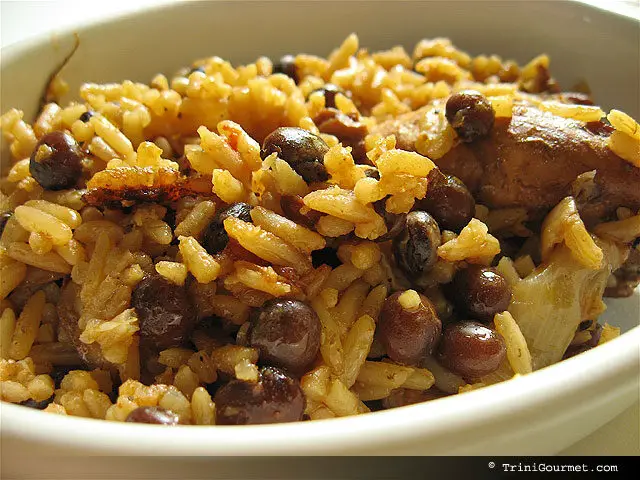
Pelau (pronounced: pay-low… rhymes with how), it’s that one dish that always seems to show up — bubbling on the stove during Carnival, filling the air with spicy goodness at beach limes, or laid out at Sunday lunch surrounded by laughter and second helpings.
For me, the gold standard is my father Bertie’s pelau.
Now, my father is a man with a very narrow cooking repertoire, but what he does do, he does well. You’ve already experienced his truly excellent pepper sauce, so why not give this one a try too? This recipe is his, just as he gave it to me when I moved off to Smith College in the USA, as a spindly 18 year old.
In this post, I’ll walk you through the exact Trinidad pelau recipe I’ve been using for years — step-by-step, stress-free, and packed with tips to help you make it just right. Whether you’re new to Caribbean cooking or just looking to finally master this cultural classic, you’re in the right place.
What Is Pelau, and Why Is It So Important?
Pelau is Trinidad and Tobago’s definitive one-pot dish — and in many ways, it’s a culinary metaphor for who we are as a people.
This hearty, soul-warming meal blends ingredients and techniques from African, Indian, European, and Chinese cultures. Typically made with rice, pigeon peas, coconut milk, vegetables and meat, it’s a rich and layered dish that reflects our country’s complex and beautiful cultural tapestry.
From Carnival to casual Sundays, pelau is a unifier — simple to serve, deeply satisfying to eat, and always full of flavour and feeling.
Let’s Get Cooking!
1. Season the Chicken
• Place the chicken in a large glass dish.
• Sprinkle with the green seasoning and the dry spice blend.
• Add a few dashes of Worcestershire and soy sauce.
• Let it marinate overnight in the fridge. (If you’re short on time, let it sit for at least 30 minutes at room temperature — but just know, rushing pelau has consequences!)
2. Brown the Sugar
• In a heavy stew pot or Dutch oven, heat 3 tablespoons of oil.
• Add 1 tablespoon of sugar.
• Let it caramelise until it’s dark brown — this is where the signature colour and flavour of pelau begins.
3. Sear the Chicken
• Carefully add the seasoned chicken to the pot.
• Brown the meat well on all sides.
• Cook until the skin starts to pull away and the chicken is half-cooked.
• Remove the chicken and set it aside in a bowl.
4. Prepare the Aromatics
• While the chicken is cooking, finely chop your onion, garlic and tomatoes.
• These will help build the body and depth of the dish once it all comes together.
5. Combine Ingredients
• Return the chicken to the pot.
• Add pigeon peas, chopped aromatics, and 2 cups of boiling water.
• Mix in your pre-made seasoning blend.
• Add salt and black pepper to taste.
• Stir everything thoroughly and bring to a gentle boil.
6. Add The Heat
• Stir in 3 tablespoons of margarine and drop in the whole scotch bonnet peppers.
• Do not burst the peppers — unless you’re after serious fire!
• Reduce heat to medium and let the flavours start to meld.
7. Add Rice and Ketchup
• Once the seasonings have softened, add 5 cups of brown rice.
• Stir to ensure everything is well mixed.
• Add 2 large spoonfuls of ketchup.
8. Simmer and Stir
• Keep the heat low to medium.
• Stir every few minutes to avoid burning or uneven cooking.
• Add ¼ cup of hot water as needed to keep the liquid level just covering the rice.
• Continue cooking until the rice is fully tender and grainy.
9. Rest and Fluff
• Once the rice is cooked, turn off the heat.
• Cover the pot and let it rest for 10–15 minutes.
• Fluff gently with a fork before serving.
10. Serve and Celebrate
• Dish it up with your favourite sides — coleslaw, cucumber slices, or a fresh green salad.
Add 2 teaspoons of salt, a few shakes of black pepper.
Add several dashes of worcestershire sauce and soy sauce.
Allow to stand overnight in the fridge (if yuh in a rush 1/2 hours at room temperature is my personal minimum… however, if yuh goin’ an’ rush pelau doh come complainin’ to meh about de results :P)
Place 3 tablespoons of oil in a stew pot (or dutch oven).
Bring to high heat and add one level tablespoon of sugar and allow to brown
Cook chicken until skin pulls away and chicken is -half- cooked.
Empty chicken into bowl.
Finely chop the onion, garlic, and tomato – place into a separate bowl
Pour chicken into a 6-8 quart pot.
Empty pigeon peas into the pot with the chicken.
Add 2 cups of hot/boiling water.
Add the seasonings and salt and black pepper
Stir pot to integrate all contents until pot starts to boil again.
Add 3 tablespoons of margarine to pot and drop in scotch bonnet peppers.
Turn down heat to medium
Add 2 potspoons of ketchup to pot and stir *(doh buss de pepper!!! 🙂 )*
When seasoning has softened add 5 cups of rice
Stir pot to mix evenly and cover.
Maintain moderate to low heat so that the pot continues cooking. Stir periodically to ensure even mix and cooking of rice.
Add 1/4 cups of hot water as necessary until rice is cooked and grainy (Basically as the rice slowly swells the water level will drop. Add water periodically to keep the liquid on level with the rice grains. Stirring each time to ensure even cooking).
When grains are cooked remove cover.
On low heat allow pot to continue to simmer until moisture disappears.
EAT!!! 🙂
Tips & Tweaks
• Protein Swaps: Try beef, lamb, or even vegan versions with mushrooms, smoked tofu, seitan or lentils.
• Rice Options: White rice will cook faster; brown rice adds depth.
• Coconut Twist: Want even more creaminess? Stir in a bit of extra coconut milk halfway through.
• Batch Cooking: Pelau is excellent for meal prep and tastes even better the next day.
A Dish That Holds Memories (2025 update)
Every time I make this dish, I remember my father. His quiet confidence as he stood over the stove, of the way the house filled with the unmistakable smell of browning sugar and spiced chicken. I remember the times we ate it as a family — out of Tupperware at the beach, or sitting around the TV at home with our trays, each plate a little different, but always comforting.
Bertie’s pelau isn’t just about the recipe. It’s about presence. About knowing that sometimes, love is best shown in something as simple as stirring a pot, seasoning by instinct, and sharing what you’ve made.
If you’ve never made pelau before, I hope this recipe becomes part of your own story too — something you turn to when you want to feel connected, nourished, and rooted.
Ready to Sweeten the Deal?
Once you’ve nailed your savoury, why not explore the sweeter side of Trini cooking?
Chef’s Table: Ciabatta-Wrapped Sea Bass (ABC News)This recipe for Ciabatta-Wrapped Striped Bass just caught my eye and is definitely a novel and creative way to use ciabatta bread!
Combining the flavours of a saffron sauce with a tomato-fennel stew, and easily adaptable to kosher restrictions, this will definitely be gracing my dinner table in the near future (I’ll probably be leaving out the capers though, can’t stand those! 😉 )
Ciabatta bread is still relatively unknown here in Trinidad however gourmet stores and bakeries are increasingly including it in their offerings (I personally buy mine at Peppercorns when in a rush – the holes are not as large as one would like but the crust is wonderful).
Finally! I have completed (and posted) a Daring Cooks Challenge on time! I have been cooking along with this most recent adjunct to the Daring Bakers community but have always ended up missing the deadlines for one reason or another. No more!
This time around the challenge was Indian Dosas. I’ve made dosas before but this was my first time doing so with gluten-free flour. Two suggested accompaniments were also given; a curried chickpea filling and a coconut curry gravy. I decided to use the recommended filling but broke away and made a Tridoshic Dal recipe that I’ve had my eye on for a few years.
I’ve noticed that gluten-free flours don’t brown up like traditional ones do, so the dosas were a good bit paler than what I’m used to. That didn’t affect the taste though and I really enjoyed how they came out. The filling however was not as satisfying. The proportions and seasonings were all wrong where my preferences were concerned. The seasonings were much too overpowering. I tried to balance things out by adding some tomato but even that wasn’t enough. My next recourse would have been to throw in some coconut milk but that would have turned it into a sauce, which wasn’t what I wanted. I had no choice but to leave it be. Although J said he liked it in the future I will stick to my tried and true curried channa recipe.
The true star of the ensemble was the Tridoshic Dal. Warm, comforting and blissfully aromatic, it was the perfect balance to the spiciness of the filling and formed a great sopping sauce for the dosas as well 🙂
In the end I think that the success of this dish lies in finding the right balance of flavours in the fillings and sauces. I definitely want to play around some more! Any adventurous suggestions? I’m glame for (almost) anything, just no pork or shellfish please 😉
Indian Dosas Source: Debyi of Healthy Vegan Kitchen
Serves 4
INGREDIENTS:
1 cup (120gm/8oz) spelt flour (or all-purpose, gluten free flour)
½ tsp (2½ gm) salt
½ tsp (2½ gm) baking powder
½ tsp (2½ gm) curry powder
½ cup (125ml/4oz) almond milk (or soy, or rice, etc.)
¾ cup (175ml/6oz) water (you will need more if using gluten-free flour, add gradually)
cooking spray, if needed
METHOD:
1.Combine the dry ingredients in a bowl, slowly adding the almond milk and water, whisking until smooth.
2.Heat a nonstick skillet over medium heat. Spray your pan with a thin layer of cooking spray, if needed.
3.Ladle 2 tablespoons of batter into the center of your pan in a circular motion until it is a thin, round pancake. When bubbles appear on the surface and it no longer looks wet, flip it over and cook for a few seconds. Remove from heat and repeat with remaining batter. Makes 8 pancakes.
I did it! I finally bit the bullet, pushed through my fear and made pasta! That’s right, thanks to Daring Bakers, I have finally achieved something that I’ve wanted to do since starting this blog in 2006 🙂
With the late showing of this post you would never believe that I actually made this lasagna over a week ago. What can I say? It’s been one of those weeks (for the past few weeks)! But better late than never, right? 🙂
For this lasagne I pretty much followed the instructions to a tee, except for the ragu. Since mixing meat with dairy is a huge kosher ‘don’t’ I decided to improvise an eggplant one instead. This change in no way compromised the final result as it was a hands-down, all-around hit! What I loved about this recipe was its ‘less is more’ attitude, something I have really come to embrace in my years as a food blogger. If you think that lasagna needs to ooze cheese, tomato sauce, or any other ingredient, this dish will seriously have you rethinking those priorities! 😉
Preparation Time: 15 minutes to assemble and 40 minutes cooking time
10 quarts (9 litres) salted water
1 recipe Spinach Pasta cut for lasagna (recipe follows)#1
1 recipe Bechamel Sauce (recipe follows)#2
1 recipe of your favourite ragu
1 cup (4 ounces/125g) freshly grated Parmigiano-Reggiano
Method
Working Ahead:
The ragu and the béchamel sauce can be made up to three days ahead. The ragu can also be frozen for up to one month. The pasta can be rolled out, cut and dried up to 24 hours before cooking. The assembled lasagne can wait at room temperature (20 degrees Celsius/68 degrees Fahrenheit) about 1 hour before baking. Do not refrigerate it before baking, as the topping of béchamel and cheese will overcook by the time the center is hot.
Assembling the Ingredients:
Have all the sauces, rewarmed gently over a medium heat, and the pasta at hand. Have a large perforated skimmer and a large bowl of cold water next to the stove. Spread a double thickness of paper towels over a large counter space. Preheat the oven to 350 degrees Fahrenheit (180 degrees Celsius). Oil or butter a 3 quart (approx 3 litre) shallow baking dish.
Cooking the Pasta:
Bring the salted water to a boil. Drop about four pieces of pasta in the water at a time. Cook about 2 minutes. If you are using dried pasta, cook about 4 minutes, taste, and cook longer if necessary. The pasta will continue cooking during baking, so make sure it is only barely tender. Lift the lasagne from the water with a skimmer, drain, and then slip into the bowl of cold water to stop cooking. When cool, lift out and dry on the paper towels. Repeat until all the pasta is cooked.
Assembling the Lasagne:
Spread a thin layer of béchamel over the bottom of the baking dish. Arrange a layer of about four overlapping sheets of pasta over the béchamel. Spread a thin layer of béchamel (about 3 or 4 spoonfuls) over the pasta, and then an equally thin layer of the ragu. Sprinkle with about 1&1/2 tablespoons of the béchamel and about 1/3 cup of the cheese. Repeat the layers until all ingredients are used, finishing with béchamel sauce and topping with a generous dusting of cheese.
Baking and Serving the Lasagne:
Cover the baking dish lightly with foil, taking care not to let it touch the top of the lasagne. Bake 40 minutes, or until almost heated through. Remove the foil and bake another 10 minutes, or until hot in the center (test by inserting a knife – if it comes out very warm, the dish is ready). Take care not to brown the cheese topping. It should be melted, creamy looking and barely tinged with a little gold. Turn off the oven, leave the door ajar and let the lasagne rest for about 10 minutes. Then serve.
This is not a solid lasagne, but a moist one that slips a bit when it is cut and served.
#1 Spinach Egg Pasta (Pasta Verde)
Preparation: 45 minutes
Makes enough for 6 to 8 first course servings or 4 to 6 main course servings, equivalent to 1 pound (450g) dried boxed pasta.
2 jumbo eggs (2 ounces/60g or more)
10 ounces (300g) fresh spinach, rinsed dry, and finely chopped; or 6 ounces (170g) frozen chopped spinach, defrosted and squeezed dry
3&1/2 cups (14 ounces/400g) all purpose unbleached (plain) flour (organic stone ground preferred)
Working by Hand:
Equipment
A roomy work surface, 24 to 30 inches deep by 30 to 36 inches (60cm to 77cm deep by 60cm to 92cm). Any smooth surface will do, but marble cools dough slightly, making it less flexible than desired.
A pastry scraper and a small wooden spoon for blending the dough.
A wooden dowel-style rolling pin. In Italy, pasta makers use one about 35 inches long and 2 inches thick (89cm long and 5cm thick). The shorter American-style pin with handles at either end can be used, but the longer it is, the easier it is to roll the pasta.
Note: although it is not traditional, Enza has successfully made pasta with a marble rolling pin, and this can be substituted for the wooden pin, if you have one.
Plastic wrap to wrap the resting dough and to cover rolled-out pasta waiting to be filled. It protects the pasta from drying out too quickly.
A sharp chef’s knife for cutting pasta sheets.
Cloth-covered chair backs, broom handles, or specially designed pasta racks found in cookware shops for draping the pasta.
Mixing the dough:
Mound the flour in the center of your work surface and make a well in the middle. Add the eggs and spinach. Use a wooden spoon to beat together the eggs and spinach. Then gradually start incorporating shallow scrapings of flour from the sides of the well into the liquid. As you work more and more flour into the liquid, the well’s sides may collapse. Use a pastry scraper to keep the liquids from running off and to incorporate the last bits of flour into the dough. Don’t worry if it looks like a hopelessly rough and messy lump.
Kneading:
With the aid of the scraper to scoop up unruly pieces, start kneading the dough. Once it becomes a cohesive mass, use the scraper to remove any bits of hard flour on the work surface – these will make the dough lumpy. Knead the dough for about 3 minutes. Its consistency should be elastic and a little sticky. If it is too sticky to move easily, knead in a few more tablespoons of flour. Continue kneading about 10 minutes, or until the dough has become satiny, smooth, and very elastic. It will feel alive under your hands. Do not shortcut this step. Wrap the dough in plastic wrap, and let it relax at room temperature 30 minutes to 3 hours.
Stretching and Thinning:
If using an extra-long rolling pin work with half the dough at a time. With a regular-length rolling pin, roll out a quarter of the dough at a time and keep the rest of the dough wrapped. Lightly sprinkle a large work surface with flour. The idea is to stretch the dough rather than press down and push it. Shape it into a ball and begin rolling out to form a circle, frequently turning the disc of dough a quarter turn. As it thins outs, start rolling the disc back on the pin a quarter of the way toward the center and stretching it gently sideways by running the palms of your hands over the rolled-up dough from the center of the pin outward. Unroll, turn the disc a quarter turn, and repeat. Do twice more.
Stretch and even out the center of the disc by rolling the dough a quarter of the way back on the pin. Then gently push the rolling pin away from you with one hand while holding the sheet in place on the work surface with the other hand. Repeat three more times, turning the dough a quarter turn each time.
Repeat the two processes as the disc becomes larger and thinner. The goal is a sheet of even thickness. For lasagne, the sheet should be so thin that you can clearly see your hand through it and see colors. Cut into rectangles about 4 by 8 inches (10 x 20 cm).
Note: Enza says that transparency is a crucial element of lasagne pasta and the dough should be rolled as thinly as possible. She says this is why her housekeeper has such strong arms! I personally do not have such strong arms and have decided that a pasta machine will definitely be money well-spent the next time around 😀 My rectangles were complete ‘guesstimates’ as well. I didn’t want to waste any dough! 😆
Dry the pasta at room temperature and store in a sealed container or bag.
(I dried them on our dining table for 24 hours)
#2 Bechamel
Preparation Time: 15 minutes
4 tablespoons (2 ounces/60g) unsalted butter
4 tablespoons (2 ounces/60g) all purpose unbleached (plain) flour, organic stone ground preferred
2&2/3 cups (approx 570ml) milk
Salt and freshly ground pepper to taste
Freshly grated nutmeg to taste
Using a medium-sized saucepan, melt the butter over low to medium heat. Sift over the flour, whisk until smooth, and then stir (without stopping) for about 3 minutes. Whisk in the milk a little at a time and keep the mixture smooth. Bring to a slow simmer, and stir 3 to 4 minutes, or until the sauce thickens. Cook, stirring, for about 5 minutes, until the sauce thickens. Season with salt, pepper, and a hint of nutmeg.